|

|
|
|
|
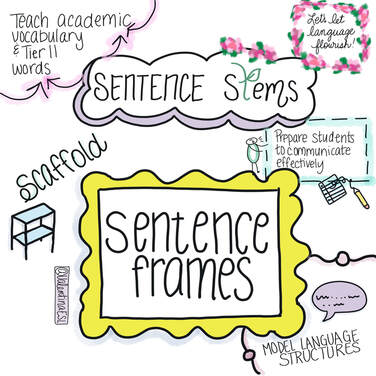 What is the difference and Why should we care?Well, first and foremost, we should care if we want our students to speak like scholars. If we want our students to be marketable after they graduate. If we want them TO graduate! Then we should care! Sentence stems and frames are scaffolds as students learn language and content.
Sometimes educators use the terms sentence stems, sentence starters and sentence frames interchangeably. You may wonder...are they the same thing? The answer is no, they are are not the same. They have their own form and function.
25 Comments

Teaching language structures is one of the most important things we do with our English learners. Embedding academic vocabulary into the language structures is key to their academic success. Making it interactive, engaging, and fun bumps it up ten notches! The Sentence Patterning Chart (a GLAD strategy) that I wrote about last January is an excellent way to build content knowledge and help students acquire language structures through authentic shared writing.
So if you haven't tried it yet, I highly suggest it. And if you have tried it, here's your next move!  Often I'm inspired to write by something I've encountered either through reading a professional book, visiting a campus or classroom, or through conversation (in person or online). This post was inspired by recent conversation online. Let me set it up for you.
A teacher wanted advice regarding a student she has who is new to the United States. The student's primary language is Spanish and the teacher is having difficulty serving the student in a main stream English classroom while also serving the other English only students. The teacher mentioned that she had yet to have a conversation with the student. Many other teachers responded giving advice. Some said it's impossible to help this child. Others said that the student first must learn English before she can learn grade level content. Some said the other students in the class will suffer if the teacher employs techniques to support the one beginner. This post was completely deficit based and many of the comments to it really touched a nerve. "I see no benefit in having her..." So if you feel that you're in a similar situation or you know someone who is, here's some advice: 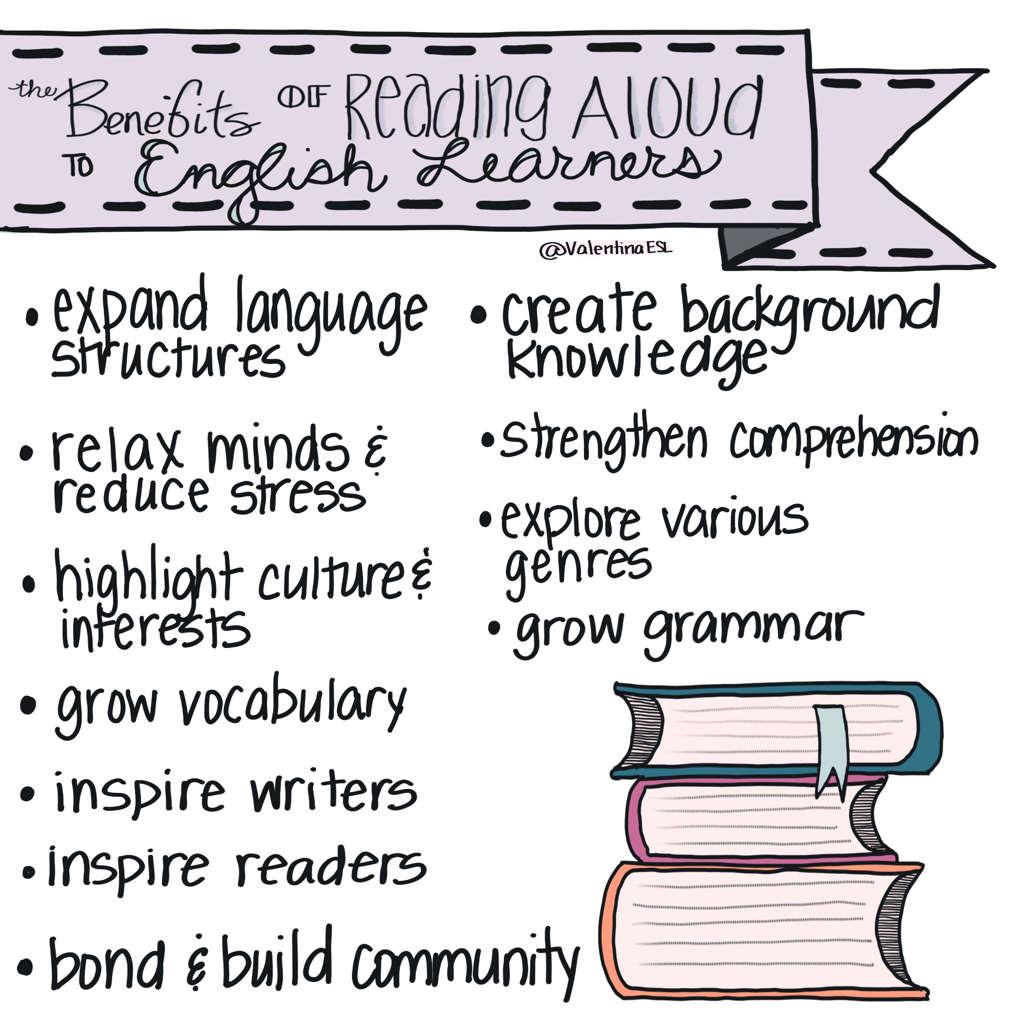 Do you remember when you were in school and your teacher said it was time for read aloud? I don't know about you, but for me, that was a joyous time. It was a time for my imagination to soar. I could take the words that were flowing so eloquently from her mouth and create a movie in my mind. I loved it.
As a classroom teacher, reading aloud to my own students became my favorite thing to do (maybe because it was magical for me as a child). I wanted to share that experience with them. But I also wanted to lift the level of learning a notch. Rather than this time being only a time for input, I was hoping to create some opportunities for output as well. ENTER Interactive Read Alouds! 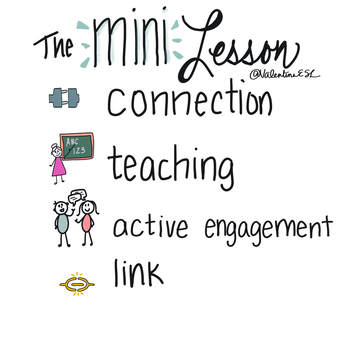 In the last post the focus was an overview of literacy components. This article will zoom in on just the mini lesson. The goals are to:
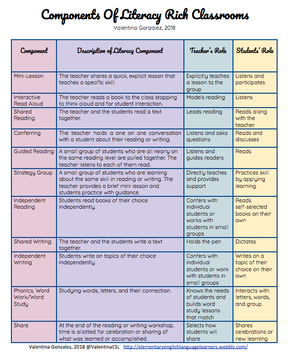 The next few posts will be related to one another regarding the topic of literacy instruction as it pertains to English learners. The focus will be specifically on supporting English learners in English Language Arts classrooms and accommodating instruction and materials to promote growth and success.
But let's begin by setting the foundation for our work with some common definitions or terms.  If you told me a couple of years ago that I would have a professional learning network that spans around the globe filled with authors and educators K-adult ed, I might have laughed at you. Well, maybe not laughed, but I would have given you a crazy look for sure. A "no way" look.
In the spirit of November, the month of gratitude, I am filled with a thankful heart. A heart filled with joy and blessings knowing that I am surrounded (virtually) by a community of professionals that I can count on who support and inspire me. How did this happen? Twitter. Though I opened my Twitter account many years ago, I only began to capitalize on it's strength as a tool in my career in December 2016. It wasn't until then that I realized HOW to use Twitter to learn from others and build a network of colleagues that I can call my PLN (professional learning network). The WHY... Some might ask, "Why is this necessary? Why do I need a PLN through Twitter? I already have colleagues at my school and in my district." Well, I can tell you why. I, too, have a PLN at work. I still work in a K-12 district. I work with amazing professionals whom I love and adore. They are brilliant educators. And I learn everyday from them. However, learning from others in various districts, counties, states, countries, and continents, has given me a myriad of perspectives that I cannot have from within my own district. Learning from a wider scope opens up new opportunities and experiences. It's similar to your neighborhood. Look down your street. You might notice that the trees and flowers at each home are quite similar. Everyone is planting similar things because we get ideas from our neighbors. But if you go to a neighborhood across town, their landscapes are filled with different plants. Growing your PLN will help you grow new ideas and try new instructional methods with your students. Who to Follow: My heart is filled with gratitude because of the connections I've made with eduheroes like Larry Ferlazzo, Carol Salva, Tan Huynh, Emily Francis, Katie Toppel, Carlota Holder, Jess Bell, Leticia Trower, Andrea Honigsfeld, and many more! In addition to these Tweeps, I enjoy collaborating with Middle Web, Seidlitz Education, MindShift, Teacher2Teacher, Education Week Teacher, Talking Points, and so many others. If you are still hesitant about Twitter, here's what I can suggest to you:
 Core beliefs should anchor what we do. We all have beliefs about life, about learning, about people, about all things. It's important that we reflect and think critically about what are CORE, essential beliefs are about the things that are important to us.
Once we identify our CORE beliefs, we can use those to help ensure that we are doing what is right for students. Take a moment before you read on, to think and jot down 3-5 of your CORE beliefs about language or language acquisition. Then I will share mine with you. Supporting Students and Teachers as a Paraprofessional ESL Educator: 6 Things You Can Try Now9/22/2018 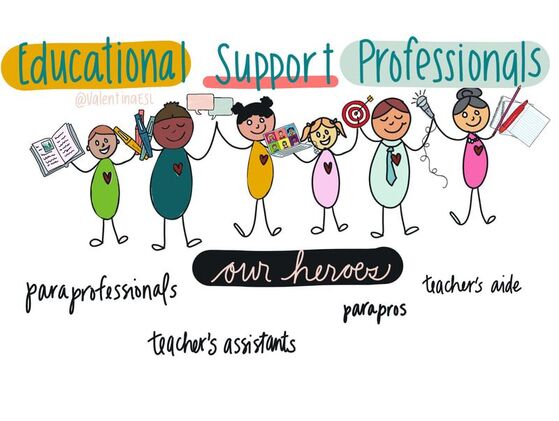 No matter what you call them, paraprofessionals are often the school's unsung heroes.
Paraprofessional educators truly serve more than students. They serve the teachers on the campus as well. They have one of the most challenging jobs. If you are a paraprofessional educator reading this article, let me commend you. You do so much for so many people. If are a teacher reading this, thank your paraprofessionals. Give them some extra love. And pass this article along to them so they can grow in their craft. I wrote this because as a professional development specialist and one who works alongside schools, I recognized that there is little out there written specifically for paraprofessional educators. The need is clear. So this is for you, our amazing educational support professionals. Over the years, I have worked with many paraprofessionals and learned from each of them. Each one had their strengths. Several had either been certified teachers themselves who didn't want the extra responsibilities of a teacher and therefore took on the paraprofessional role, or were in the midst of becoming teacher certified. No matter their own educational experiences, they were each dedicated to students and teachers. And that's what makes the difference. The roles of paraprofessionals who work with English Learners are many. But here are six. What might you add?  Recently I read a post on a Facebook group asking whether or not teachers allow their English learners to speak in their primary/native language in class. Now to me, there is no need to think about the answer. It's a no brainer. Do I allow my students to speak in their native language in class?
 & What to do insteadIn some parts of the world, school has already started. The first day has passed. Eager teachers welcomed students into their classrooms. Nervous students began their year in a new environment. Whether you have already started your new school year or you are about to launch it soon, you might find these 3 mistakes familiar. Over the years, here's what I've learned about how to make the best of the first day with my English Learners (and frankly all students) so that the rest of the year can by successful.
Mistake #1 Focusing on rules 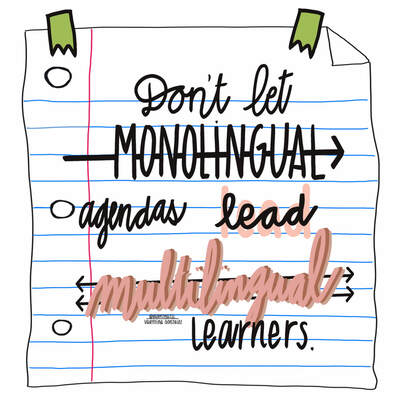 When I was in elementary school, I was an English learner. I remember vividly sitting in reading block with a book. Peering over it to see what everyone else was doing. I used the book as a shield to cover myself so no one would notice that I was lost in DEAR time or sustained silent reading. I couldn't read the book that was in my hands, but I could certainly look like it. I knew how to pretend I was reading. I observed what everyone else was doing and I played along.
For many English learners this is the experience with independent reading. We know that reading is the best way to become a stronger reader. But for English learners this period of the day can be a waste if support is not provided by the teacher.  Well, to begin with, I had a one hour layover in Atlanta from Houston to South Carolina. However the flight from Houston ran 30 minutes late. Turned out when we landed in Atlanta, I had 30 minutes to make it to my connecting flight.
I had never been to the Atlanta airpot before. Those of you that have been to the Atlanta Airport may see where this is going.  Whether you are reading this during your summer break or during the midst of the school year, just the fact you are reading it means you are looking for self-directed professional learning. And I applaud you!
Just like students, teachers, too, can suffer from a "summer slide" or plateau in development unless we connect with other educators, attend professional learning, or read books that invigorate our craft. Summer offers the perfect time to reflect on our teaching practices, refine, and reclaim our roles as leaders of learning. But ongoing learning can happen throughout the year! Here are a few ways to stay fresh!  As teachers, one of our goals is to foster a LOVE of reading in our students. We want them to leave our classrooms WANTING to read for pleasure. We want them to pick up books on their own. We want them to carry a book around where ever they go and read it in their free time.
In order to achieve these high expectations, we have to create an environment, a happy place, to read willingly in our classrooms. Our classrooms have to say, "Hey, come in here, grab a book and snuggle up." The question is, how do we do that?  On June 23, 2018 I was asked to participate as a presenter for the 2nd Annual VirtuEL Conference. What an honor! I presented on Growing Literacy with Visuals. This presentation is less than 16 minutes and gives teachers an explanation for the Picture Word Inductive Model. You can learn the why, how and what! You will be able to easily implement this instructional strategy into your k-12 content classroom to grow language! Watch the video below to learn more. And click this link to watch all the other amazing presenters as well including Jana Echevarria, Larry Ferlazzo, and Emily Francis! 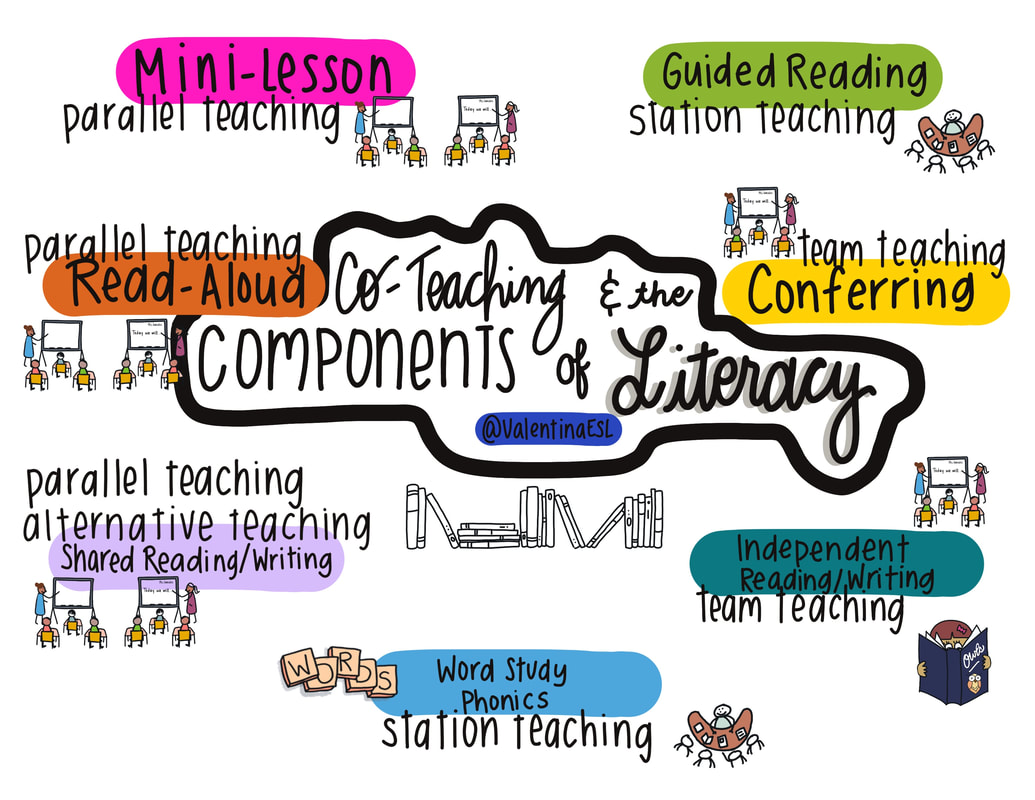 As a co-teacher, you might wonder how co-teaching fits in with the components of literacy. Or you might be a main stream (general education) teacher that has a co-teacher and you wonder how to best utilize two teachers in the room during reading and writing instruction. Many ESL teachers co-teach in classrooms during reading and writing blocks. It's important to know which co-teaching approaches fit best with each component of literacy instruction.
 It is about relationshipsFor years teachers have been told that the first day of school is all about setting boundaries, being firm, and even "mean" to students. I say we take this bad advice and dump it!!
Day ONE is not about rules, it's all about building relationships.  I know...it's about to be summer. You're probably thinking why are we talking about parent-teacher conferences? Well, this is actually a great time to set a plan that will make the most of your time with parents of ELs. Building a team to support your students is like building a foundation. It's either going to be sturdy and strong or it's going to be weak and easily broken. Which do you prefer?
If you're like me, you want the strong foundation. Here are my tried and true suggestions for amping up your parent-teacher conferences. 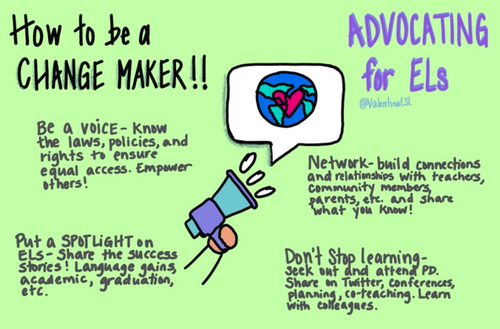 advocating for English LearnersWhen I first began my role as an ESL teacher, I have to admit, I didn't know much about ELLs other than my own experiences. My experience growing up as an English learner helped me form my beliefs about language learning and helped me as I worked with ELs in my general education classroom.
But the year I left the general education classroom and moved into the role of an ESL teacher who supported all grades, co-taught, and pulled newcomer students out for intense English instruction, I realized that I needed to learn more and do more. I was seen as the ESL/ELL specialist on my campus. And that meant a lot to me. The students were counting on me to support their language development and to support their teachers. I had to step up my game and FAST! How to handle resistance from teachers This topic has been rolling around in my mind for quite some time. I hear about the problem from EL teachers around the nation. Not to mention that as an EL teacher myself, I encountered this struggle too many times. I remember vividly having a meeting with a gen ed teacher. One of our students was struggling in her class. He hadn't been in the US very long, only a bit over a year. So I asked that we meet to discuss how I could help to plan with her and accommodate instruction. I was met with resistance from the moment I walked in the room. The teacher explained that she felt that this student (along with all the other ELs) should not have anything different than everyone in the class. She explained that she has heard him speak and that he is capable of doing the work. She went on to tell me that the grades were reflective of defiance and not ability. Ouch. I listened. Quietly. But it was difficult. And then when she finished, I carefully shared with her his language levels in each domain explaining the difference between social and academic language. We took a look at the types of accommodations that were appropriate for a learner at his language proficiency. In the end, it took a while for this teacher to come around. It took support, scaffolding, and leading the teacher to find the best way to make progress with the student. And to begin with, rebuilding their relationship came first. This student needed to know that the teacher genuinely cared about his education and growth. So what can you do if you are faced with a similar dilemma? Here are a few tips I've learned along the way: 1. Build a caring relationship with the teacher. The teacher will not trust you unless a solid foundation is there. Begin with casual conversations that have nothing to do with school. Get to know the teacher beyond work. Ask personal questions (but not too personal). Then start talking about content. Discuss the learning that's happening in the classroom. Finally talk about specific students, how they are doing, what they need to succeed, etc. This will not happen in one day, not in a week...it will take time. 2. Scaffold the teacher's learning. Model for the teacher (if you can) what you would like for him/her to do with students. If the teacher would benefit from understanding language development, scaffold that instruction for them. Introduce it in small chunks or provide visuals. 3. Model lessons. The best professional development is learning from other educators or our peers. Model lessons for the teacher that highlight accommodations. If you are a co-teacher, then this will work out great. If this is not possible, set up a time when the teacher can observe another educator to see a lesson. This is great because it not only helps your teacher who is struggling but also builds capacity for the other teacher. 4. Suggest professional learning opportunities. When the teacher is open to learning more, suggest professional development that will help to build on their practice. In-district PD, out of district PD, online learning, professional books, or twitter chats, are excellent. Each teacher will have their own learning style. Some like face to face while others prefer to read on their own or learn on line. The good news is that there are many options available these days. Being culturally aware and responsive to our students' needs is critical to their success. The more we support them during their learning, the better they will perform when it counts. I have found it helpful to share this cultural proficiency continuum (shared with me at a training) with educators and let them self-reflect. 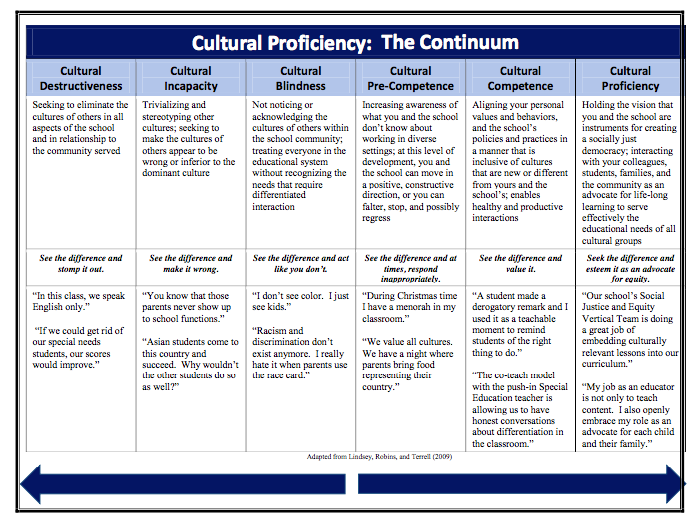 author unknown  As teachers, we've probably heard of "book tastings" for students. But have you every held one of these for your colleagues?
This is a unique type of professional learning that can promote more learning and individual growth. Here's how I recently held one with my colleagues: 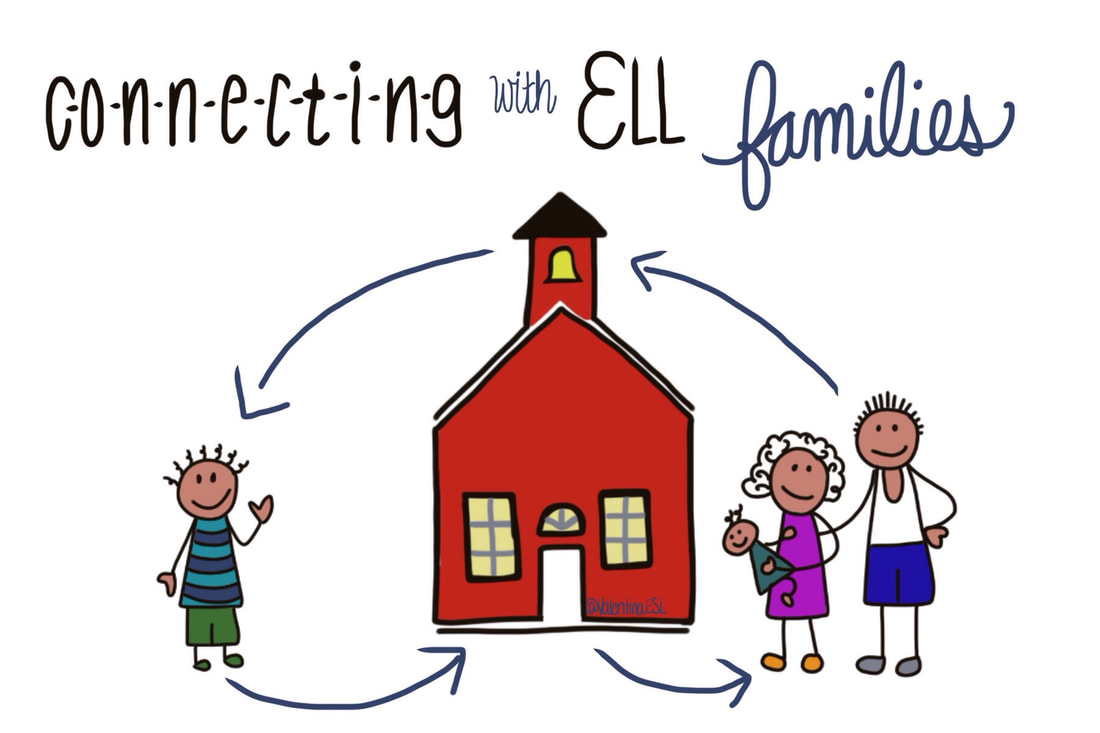 Reflecting back on my own years in elementary school, I bet my parents may have seemed like they were not very involved with my education. We were new immigrants. And they spoke very little English. Adding to that, the cultural norms for school interaction were different where we came from. It may have seemed to my teachers that my parents were absent from my education. In fact, they were extremely present (at home). But maybe not they way that my teachers expected them to be. Not in the traditional American sense.
My parents didn't come to parent teacher conferences. Well, that would have been a challenge. My dad worked every minute of overtime that he possibly could just to keep a roof over our heads. We had one vehicle so that meant my mom was at home without transportation. And even if she could come up to the school, she had my baby sister to care for. Oh and my mom's English speaking skills were the least developed.  Picture your classroom...What is it like? What are students doing? What does it sound like? How does it feel to be a kid in there?
Recently I watched this awesome TEDtalk and it resonated with me. It made think about what we are asking of our students each day, and it made me reflect on whether or not our beliefs align with our practices.  English language structures can be confusing for a student who is learning English as a second or other language. Language structures may differ and cause
English learners to struggle with language structures in English. Enter...The Sentence Patterning CHART. The Sentence Patterning Chart is an excellent method for exposing learners to English language structures while teaching content. The benefits of this technique are amazing:
|
Categories
All

|


 RSS Feed