|
Language acquisition and language development are two similar yet slightly different aspects of teaching multilingual learners. Both are important and needed in instruction. Let's explore the differences and similarities.
Invited Guest Author Post by Dolores Diosdado Image from iStock Photos Every year in Texas, over a million students are administered TELPAS. Yet many educators, students, and caregivers are left in the dark about why TELPAS is important. TELPAS is a critical assessment that provides students, families, campuses, and districts with meaningful data to ensure equitable access to resources, professional development, and instructional support. It also holds districts accountable for supporting students’ linguistic growth.
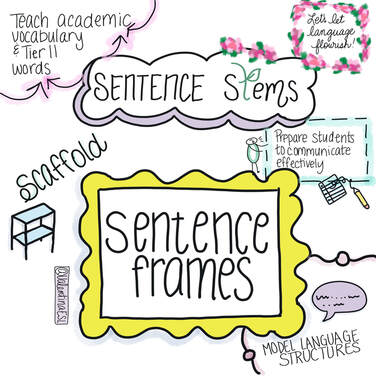
When educators and families understand the TELPAS process from beginning to end, they are better equipped to make informed decisions and advocate for student success. TELPAS should not be viewed as just another test; instead, it should be valued as a tool that helps educators provide intentional instruction and meaningful language experiences that support long-term academic achievement. What Is TELPAS? What is the difference and Why should we care?Well, first and foremost, we should care if we want our students to speak like scholars. If we want our students to be marketable after they graduate. If we want them TO graduate! Then we should care! Sentence stems and frames are scaffolds as students learn language and content.
Sometimes educators use the terms sentence stems, sentence starters and sentence frames interchangeably. You may wonder...are they the same thing? The answer is no, they are are not the same. They have their own form and function.
A huge part of balanced literacy and a workshop setting is conferring with students. Conferring allows for maximum differentiation to meet specific instructional needs for students. But when we serve students who are also learning English, there is a need to accommodate the way we confer. After years of conferring with ELLs and tons of reading in the field, here are my tips for conferring with ELLs.
1. Model
Each kid benefits from seeing how to write before they DO the writing. BUT for English Learners this is even more important because language structures may vary from their native language. For example, if I want my students to write about themselves describing their age, I might show them that in English we write: " I am nine years old." This is different from other languages like my native language where a person might say, "I have nine years." Modeling what we expect from students gives them a clear goal for their writing. 2. Be Explicit |
Categories
All
|